



Introduction
The increasing trend of continuous learning and self-upgrading to meet current industry demands has led to the exponential growth of online education worldwide. Students and working professionals are going after online education due to its flexibility and high accessibility. There are numerous benefits of online classes and education as compared to traditional learning methods, and this is why learners are choosing online degree programs.
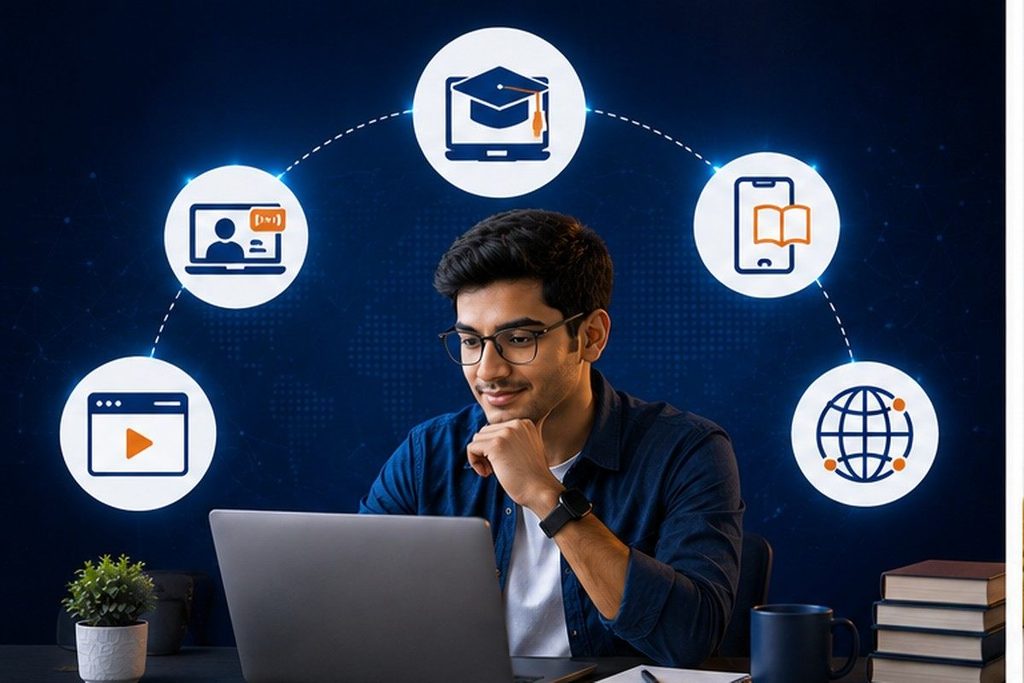
With the technological advancements and updated curriculum of online degree programs, as per the new education policy, the benefits of online classes for working professionals have immensely enhanced and have resulted in an ideal choice for college students as well.
If you are still wondering “why online learning is better”, read this blog till the end and gather an in-depth understanding of the benefits of online classes and why learners are choosing online degrees.
What Are Online Classes?
Online classes are a learning experience similar to traditional classes; the only difference is that they are conducted virtually over the internet through online learning platforms like Zoom, Microsoft Teams, Google Meet, etc.
Unlike traditional classes, online classes do not require the physical presence of students and the tutor in the same place. Students can appear for online classes from anywhere in the world with complete remote access and a 100% online learning format.
Meaning of Online Learning
Online learning is an educational model designed to offer quality education around the world without any geographical constraints. Under this, all the academic requirements of a course or degree program, like interaction, assessment, and teaching, are conducted through digital platforms.
Key characteristics of online learning are:
- 24*7 access to learning resources.
- Digital study material like e-books, video lectures, etc.
- Online examinations, assignments, and evaluation.
- No physical presence required.
Types of Online Classes (Live, Recorded, Hybrid)
Under online classes, there are certain sub-categories, namely:
- Live classes: Real-time virtual sessions with faculty and classmates.
- Recorded classes: It is also known as asynchronous learning, which includes pre-recorded video lectures with 24*7 access.
- Hybrid: It can also be available in a blended environment, under which students are provided with a mix of live sessions. Recorded content and occasional workshops.
In some blended or hybrid classes, the institution may involve some on-campus immersion for practical exposure. It can be optional depending on the university you are enrolled in.
How Online Education Works in India
There is no specific structure that is followed by every institution providing online education in India. However, the majority of universities operate through a mix of live virtual classes (Zoom/Meet), recorded lectures, and Learning Management Systems (LMS).
All these learning platforms are flexible and can be accessed via internet-enabled devices easily. Simultaneously, these platforms carry the entire online learning journey of students, including their admissions, enrollment, assignments, examinations, evaluations, and other academic activities.
Top Benefits of Online Classes for Students and Working Professionals
There are a plethora of benefits of online classes for students and working professionals in terms of their affordability, flexibility, and other key aspects. Some of which are mentioned below in detail:
Learn Anytime, Anywhere
Students and working professionals are not limited to geographical barriers for acquiring world-class education from the comfort of their homes. Simultaneously, online classes give 24*7 access to learning materials from anywhere in the world.
Flexibility for Working Professionals
The flexibility of online classes allows working professionals to fulfil their academic requirements along with their full-time employment without any professional career gap. Online classes also do not require students to attend online classes daily; students can access the recording of live lectures at their preferred time.
Affordable Compared to Traditional Education
The fee structure of online programs is pocket-friendly and affordable as compared to traditional ones. The reason behind it includes no relocation cost, no accommodation expense, zero travel expenses, and no other miscellaneous expenses.
Access to Top Universities Without Relocation
Students can enroll in top-ranked universities in any corner of the world without relocation. Students can easily enroll in their preferred university without physically visiting the campus throughout their academic career.
Self-Paced Learning Improves Understanding
Students preparing for civil services or working professionals with other commitments, and that’s why they prefer self-paced learning that is available in online learning. It helps them improve their understanding and manage a better work-life balance.
Skill-Based Learning Approach
Modern online programs emphasize practical skills aligned with current industry trends and requirements. There are numerous components of online learning, such as assignments, case studies, simulations, and project-based assessments.
Career Continuity Without Breaks
Professionals who are involved in other responsibilities can easily continue their professional career without any break. They can continue their full-time employment while managing their commitments along with their online degree programs.
Technology-Driven Learning Experience
Online education is delivered through digital tools that enhance engagement and interaction beyond traditional classrooms. Learning Management Systems include multimedia lectures, discussion forums, analytics-based progress tracking, and collaborative projects.
Benefits of Online Classes for Working Professionals
Online education has become a strategic decision for working professionals seeking growth or advancement in their careers. One of the most significant benefits of online classes is that they allow working professionals to grow without stepping away from employment.
- Career upgrade: Online classes strengthen domain expertise among enrolled students in response to evolving industry demands. It results in career advancement and an upgrade within their profile.
- Promotions: Most organizations prioritize candidates who continuously upskill themselves, and it leads them to acquire managerial and leadership roles, or gain credibility for internal promotions.
- Salary growth: With an online postgraduate degree, professionals are eligible for higher-paying roles and specialized positions. Thus, online classes result in increased earning potential.
- Switching domains: With online classes, professionals can develop skills and abilities in their preferred domain, which also assists them in making a smooth career transition into different industries.
Benefits of Online Classes for College Students
Opting for online classes is highly beneficial for college students and recent graduates, as it offers an opportunity to explore multiple options while continuing their academic career without any break.
- Dual Learning: Students can enroll in an online UG/PG degree program and pursue additional online certification courses. It saves their time and makes them capable of standing out successfully in the global competitive world.
- Balance Between Internships and Study: Online learning allows students to discover new opportunities like internships, freelance projects, and part-time work while continuing their education.
- Early Skill Development: Online programs emphasize practical learning, allowing students to develop employable skills such as communication and collaboration, digital literacy, problem-solving abilities, etc.
Online Classes vs Traditional Classroom Learning
A brief comparison of online classes vs traditional classroom learning is in the table below:
| Factor | Online Classes | Offline Classes |
| Flexibility | High (100% virtual learning) | Low (Physical presence required with minimum attendance criteria) |
| Cost | Lower and affordable | Higher (requires relocation, accommodation, and travel) |
| Accessibility | Can be accessed from anywhere | Location-based (fixed campus) |
| Learning Pace | Personalized (self-paced) | Fixed |
| Career Continuity | Can be pursued along with full-time employment | Requires full-time commitment |
Why Online Classes Are the Future of Education in India
Education in India is undergoing a structural transformation. Online learning is no longer viewed as an alternative option for traditional programs but as a long-term education model aligned with economic, technological, and workforce evolution. Several national and global trends, along with technological advancement, indicate that online education will play a central role in the future of learning.
- Digital India growth: India’s rapid digital expansion has significantly improved access to education.
- Working population upskilling: India has the largest working population, and rather than returning to campus every few years, professionals now adopt continuous learning models integrated into their careers.
- Remote workforce trends: Remote and hybrid work models have permanently changed how organizations operate. Companies increasingly hire talent for remote work, and employees collaborate through digital tools.
- Lifelong learning: Online classes encourage lifelong learning by allowing individuals to acquire new skills at different career stages, transition between industries, and continuously adapt to technological change.
Who Should Choose Online Classes?
Any student or working professional who prefers flexible learning and is considering professional growth must choose online classes, as they are specially designed to equip professionals with in-demand skills through self-paced learning.
Meanwhile, online classes are highly recommended for:
- Working professionals
- Housewives returning to careers
- Entrepreneurs
- Tier-2/3 city learners
- Career switchers
Popular Online Degree Programs in India
There are numerous online degree programs available in India, but students are advised to only enroll in a UGC-recognized online degree program. It ensures their recognition, credibility, and global acceptance.
Some of the most popular online degree programs in India are:
- Online MBA: For management and leadership roles.
- Online MCA: For tech enthusiasts and careers in software development, IT, and data-driven roles.
- Online BBA: For foundational business knowledge.
- Online MSc: To build careers in data science, analytics, and technology fields.
- Online EMBA: For experienced professionals interested in core industry knowledge and aspiring senior management positions.
- Online DBA: For highly experienced professionals willing to switch into C-suite roles or pursue in-depth research in their desired field.
Tips to Get Maximum Benefit from Online Classes
Learner discipline and organized study habits are critical to the success of online learning. Students can maximize results by using the following checklist.
- Establish a regular study routine each week.
- Be as serious about online learning as you are about traditional classroom settings.
- Engage fully in discussion forums and live sessions.
- Regularly view recorded lectures to improve topic clarity.
- Use what you’ve learned in projects or at work.
- Maintain regular deadlines for assignment submission.
- Create peer networks by participating in online communities.
- Develop the practice of taking digital notes and conducting research.
- Before beginning a program, establish certain professional goals.
- Monitor academic and skill growth.
FAQs About Benefits of Online Classes
- Are online classes good for career growth?
- Yes, online classes are considered good for career growth because of their global acceptance, flexibility, and accessibility.
- Do employers accept online degrees?
- Yes, employers accept online degrees if issued by a UGC-recognized institution.
- Are online classes cheaper?
- Yes, the fee structure for online classes is affordable, and they are cheaper because they do not require relocation, travel, or accommodations.
- Can online learning replace classroom learning?
- No, online learning cannot replace classroom learning, as some subjects require hands-on practical learning, which can only be completed in a physical classroom setting or lab.
- Are online degrees valid in India?
- Yes, online degrees are valid in India if pursued from a university recognized by the University Grants Commission (UGC).
Conclusion
It is clear that the benefits of online classes are enormous, and they are significantly helpful in the career progression of students and working professionals. But there are certain key considerations that every learner should know before going into online education. Students are advised to always ensure that they are pursuing an online degree or courses from a recognized institution that is approved by the UGC to offer their preferred program.
Simultaneously, students should analyze their requirements first, and if their needs are fulfilled with the online learning format, then they should pursue it; if they require practical understanding and hands-on experience, then traditional courses are recommended for them.


